


MEET BILL TISDALL and olive HAMES

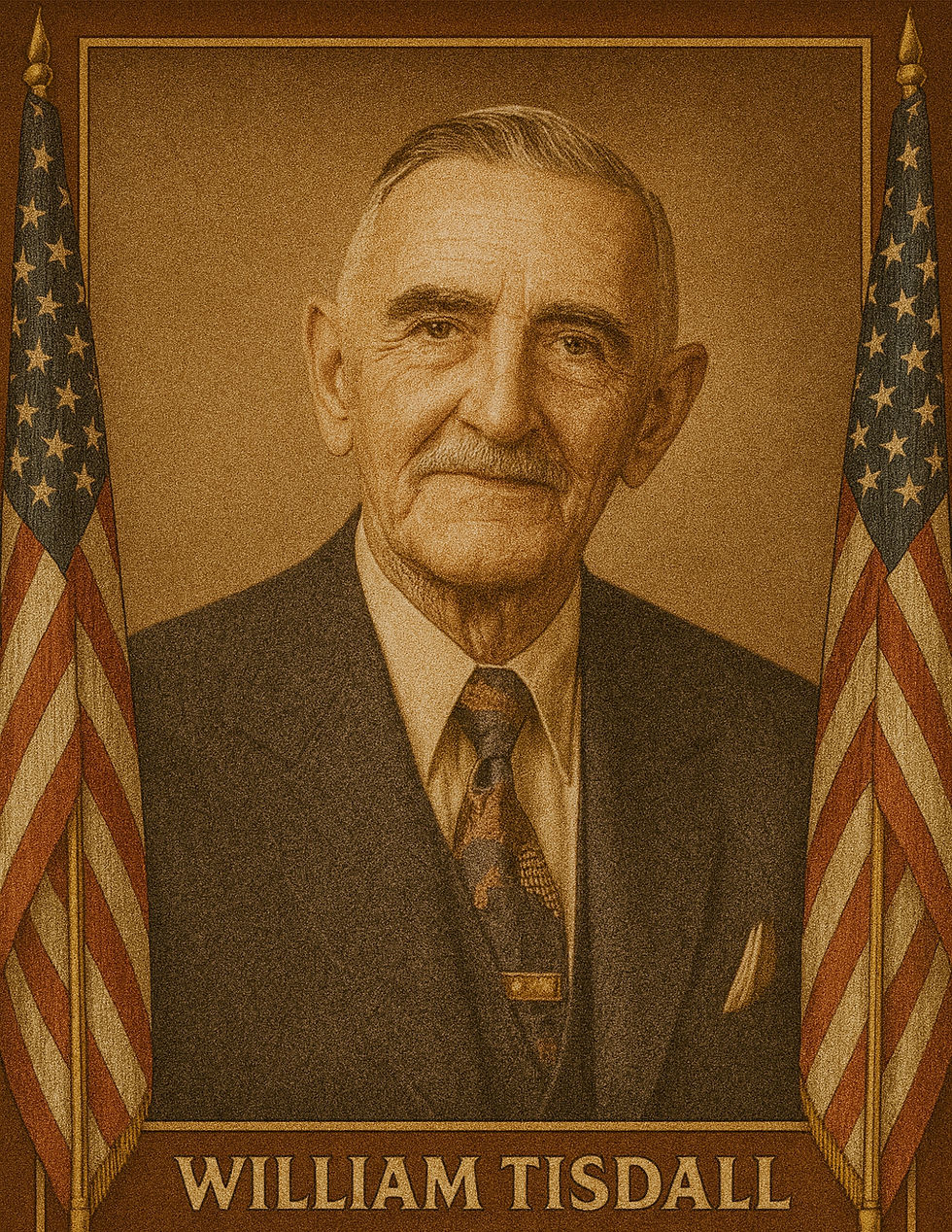
Bill TISDALL
Son · Seaman · The one who breaks away, travels the world, and settles in America
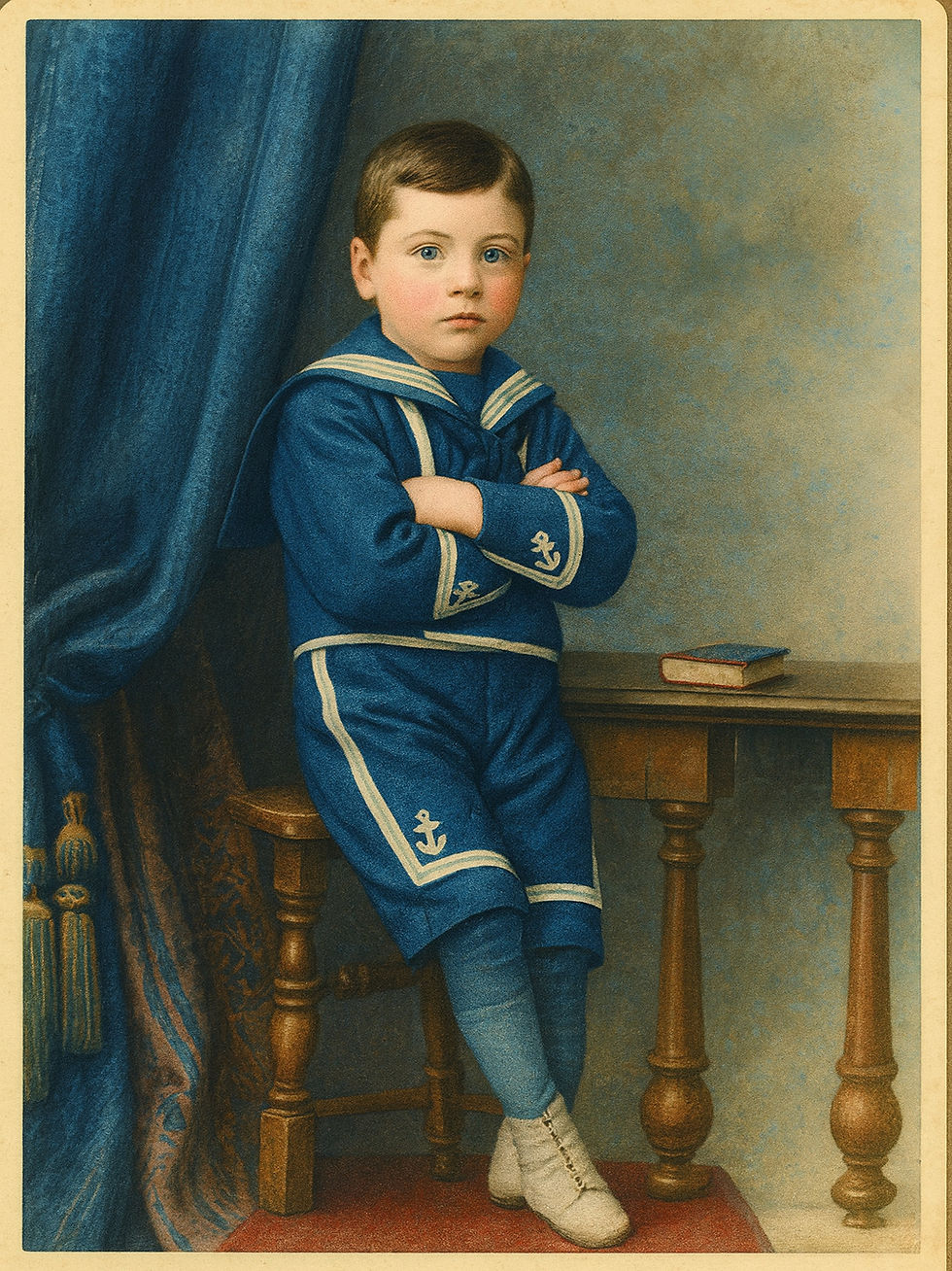
Bill Tisdall is restless.
He cannot stay still long enough to belong comfortably anywhere. Where others endure, adapt, or compromise, Bill keeps moving and travelling. The sea suits him because it offers him distance, danger, and the illusion of freedom. He becomes a merchant seaman, learning hard work the uncompromising way — long hours, physical strain, discipline, and silence.
Bill is stubborn, tough, and proud. He believes in hard labour, not soft talk. He measures worth by effort and survival. These traits carry him across the Atlantic when he decides to try his fortune in America, convinced that distance and work will finally reward him on his own terms.
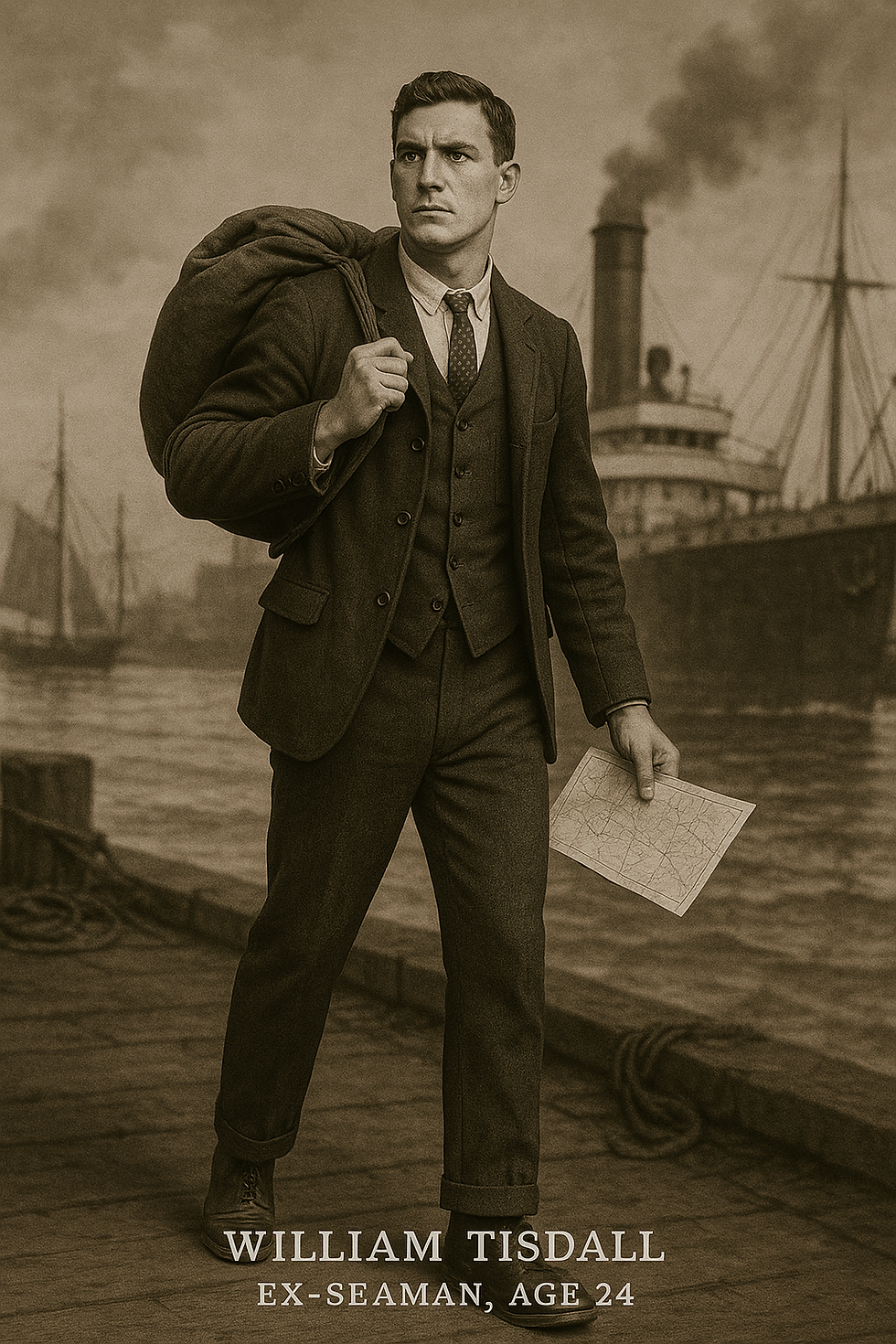
Then the late 1920s arrive.
The Depression strips away opportunity with brutal efficiency. Work dries up. Wages collapse. Promises evaporate. For a man like Bill — who believes effort should guarantee outcome — this is intolerable. He does not bend easily. He hardens.
Distance from England becomes emotional as well as physical.
An argument over his mother’s will finally severs ties completely. Bill interprets events through resentment and pride, convinced that he has been wronged. His view of the family becomes distorted by absence — shaped by assumption rather than knowledge, anger rather than truth. He stops writing. He stops listening.
The break is final.
Bill does not return home. He does not reconcile with his English Family. His life continues, but without the family that formed him — replaced by a version of the past he carries alone and is increasingly inaccurate.
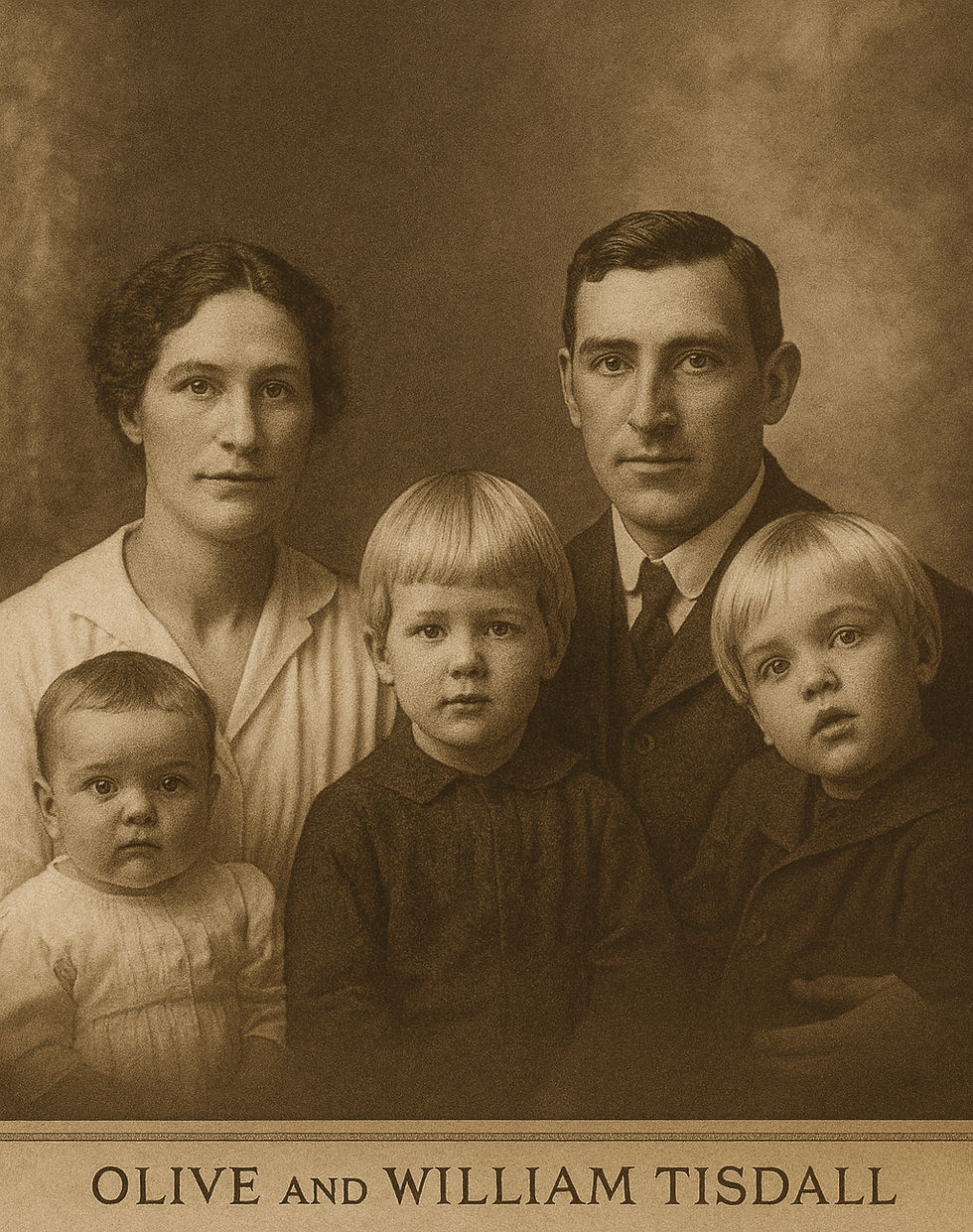
Olive HAMES TISDALL
Wife · Survivor · Grounded where Bill is not
Olive Hames comes from American pioneer stock — people who crossed land rather than oceans, who endured by staying rather than leaving. She is resilient, practical, and accustomed to hardship, but she does not share Bill’s romantic belief that distance alone creates freedom.
Marriage to a proud, stubborn man like Bill is not easy.
They struggle — not only financially, but emotionally. Bill’s pride and resentment weigh heavily on the household. He cannot admit vulnerability or disappointment. Olive bears the consequences quietly, grounded in a realism Bill resists.
Where Bill sees betrayal, Olive sees complexity.
Where Bill clings to grievance, Olive adapts.
Their marriage survives, but it is shaped by unresolved anger and the cost of a man who refuses to look back clearly.
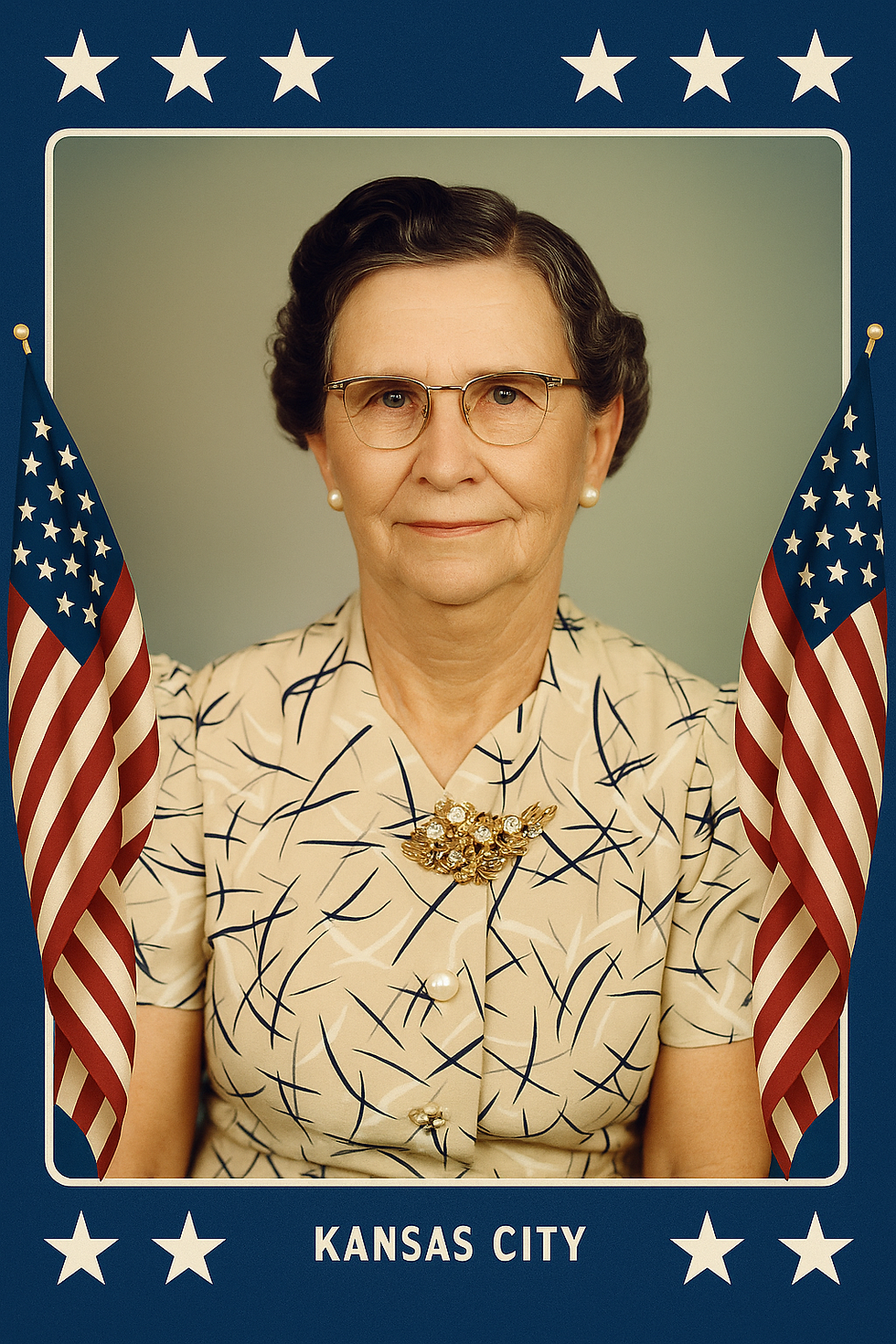
Olive lives with a version of the Tisdall family that she has never met — one filtered through letters and photographs and viewed at the end entirely through Bill’s bitterness.
Distance and Distortion
By cutting himself off, Bill does not escape his family — he misremembers them.
The novel is explicit here: distance does not preserve truth. It warps it. Bill’s understanding of events freezes at the moment of rupture and never updates.
Pride replaces curiosity. Silence replaces dialogue.
He believes he has walked away cleanly.
In reality, he has carried the fracture forward.
The Long Return (21st Century)
What Bill cannot repair, future generations do.
In the closing movement of The Tisdalls, descendants of Bill’s family, Fred’s family, and others — all women — reconnect the fractured branches in the 21st century.
They do so not through pride or argument, but through curiosity, empathy, and shared inheritance.
They compare stories.
They correct distortions.
They restore truth where grievance once stood.
The reconnection does not excuse Bill’s choices — but it contextualises them.
It shows how family fractures can last generations, and how healing often comes from those willing to listen rather than defend.
Why Bill Matters
Bill Tisdall represents a truth the novel does not shy away from:
Hard work does not guarantee fairness
Pride can become a prison
Distance can destroy accuracy
And families can be lost without anyone formally saying goodbye
His story is not one of villainy, but of unbending resolve meeting a world that does not yield.
In the end, The Tisdalls offers something quietly radical:
What men could not repair, women did — decades later, patiently, and without anger.


Comments