


MEET FRANK TISDALL

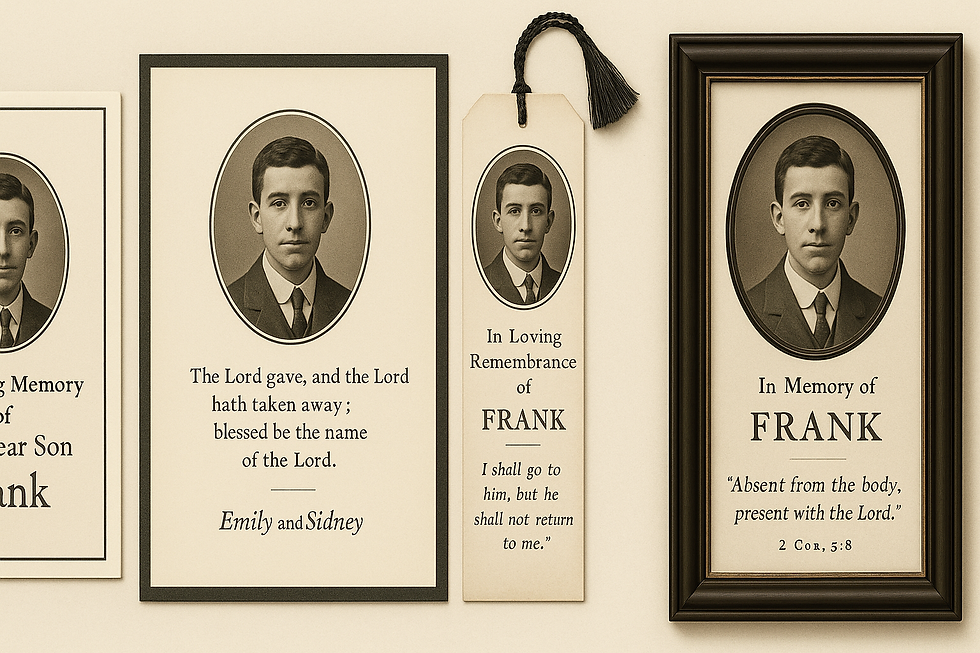
Frank Tisdall is the one who slips away first.
In a family marked by strong personalities, public roles, and visible struggle, Frank is quiet, inward, and easily overlooked as a child. He does not compete for attention. He does not argue his case. He simply observes, absorbs, draws and sketches, keeping his thoughts to himself.
Frank grows up surrounded by noise — business, performance, politics, illness, war — yet he remains separate from it all. He is not indifferent, but very private. Where others express conflict openly, Frank internalizes it. He learns early that silence can be a form of protection.
His decision to elope to Wales comes as a complete surprise precisely because he has never announced himself. There is no grand declaration, no family debate. Frank leaves quietly, choosing distance over confrontation. Wales offers him anonymity, space, and a life beyond the expectations that cling so tightly in London. His elopement is not rebellion in the dramatic sense — it is escape through gentleness, a refusal to be pulled into a life that does not fit him.
For a brief time, Frank seems to have found peace.
Away from the family, he builds something small and personal — a marriage chosen without argument, a life shaped by companionship rather than obligation. The novel treats this period with restraint, allowing the reader to understand its importance without overstating it.
Frank dies young.
His death is one of the quietest losses in The Tisdalls, and for that reason one of the most affecting. There is no long decline, no public mourning, no defining scene. His life ends suddenly before it has had time to settle into itself.
For the family, Frank’s death lands as a shock sharpened by distance. He has gone away, found happiness, and then vanished — leaving behind the ache of what was never fully known. There is a sense that something tender has been lost without ever being fully understood.
Frank Tisdall represents all those quiet lives that pass almost unnoticed by history — not because they lacked meaning, but because they were lived softly. His story reminds the reader that not all departures are dramatic, and not all tragedies are loud.
Some lives end as quietly as they were lived.


Comments