


MEET KATE TISDALL

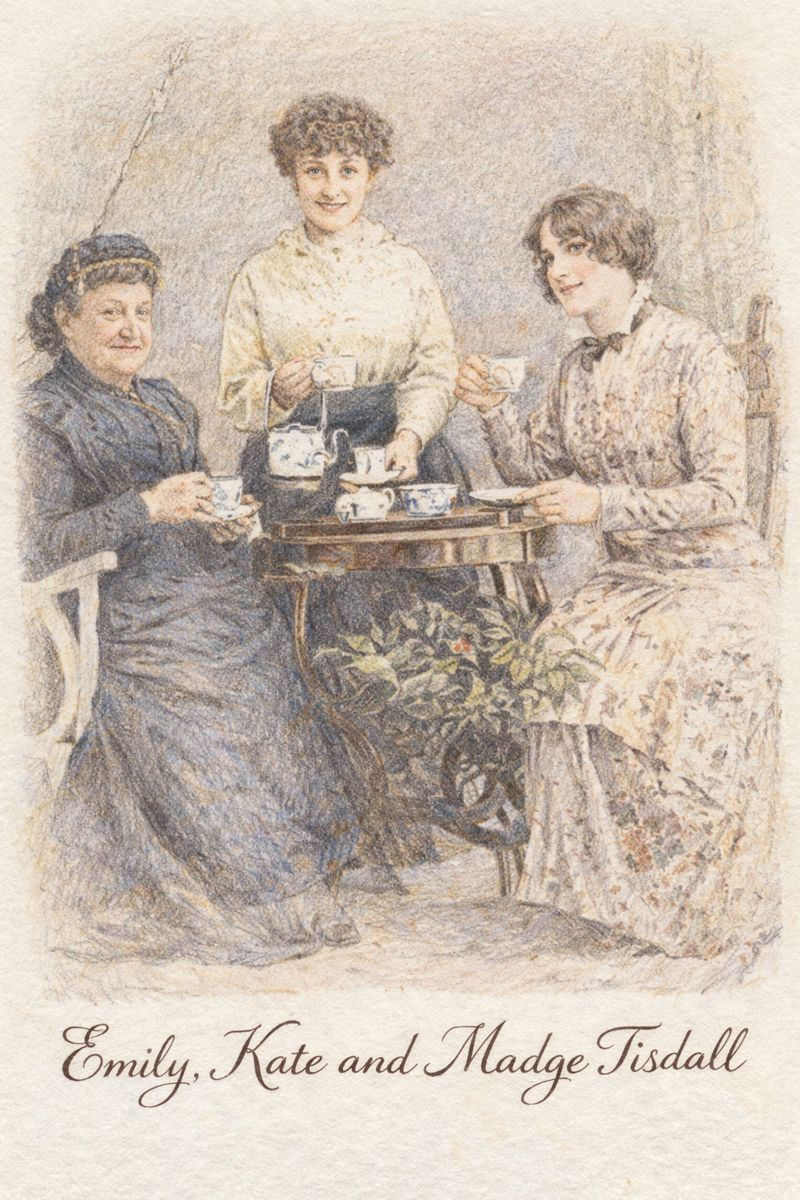
Kate Tisdall is the most inward of the Tisdall children — and the most watchful.
From an early age, Kate understands the rules of the world she inhabits: respectability is fragile, women are observed constantly, and any deviation from expectation carries consequences that ripple far beyond the individual. She learns restraint not because she lacks passion, but because she understands cost.
Kate is intelligent, thoughtful, and politically aware. She reads voraciously, follows debates around labour, women’s rights, and social reform, and quietly supports causes she believes in. Yet she never allows herself to become openly radical. She has seen how quickly labels attach themselves, and how difficult they are to shake off. Her engagement with politics is measured, cautious, and deliberately private.
Her emotional life, however, is anything but orderly.
Kate’s deepest attachment is to her best friend Petra Hepting. Their relationship is intense, intimate, and charged with feeling Kate does not yet have language for — and cannot safely acknowledge. Petra is bold where Kate is careful, expressive where Kate is contained. Through Petra, Kate glimpses a different way of living: one driven by desire, conviction, and emotional honesty.
Kate knows — long before she admits it to herself — that her feelings for Petra exceed friendship. This knowledge frightens her. She understands that naming it would place her outside the narrow boundaries of acceptability, threatening not only her own standing, but her family’s. She remains silent, even as the cost of that silence grows heavier.
Kate’s relationship with Petra's older brother, Matthias Hepting, is entirely different — and entirely one-sided.
Matthias becomes fixated on Kate. He watches her, follows her movements, appears where she does not expect him, and constructs an emotional life around a woman who does not reciprocate his feelings. His love is unspoken, unreturned, and corrosive. It eats away at him, turning longing into resentment and desire into anger.
Kate is aware of his presence, and deeply uncomfortable with it. She does nothing to encourage him, yet cannot entirely escape his gaze. Matthias’s obsession becomes another unchosen burden she must carry carefully, without drawing attention or inviting scandal.
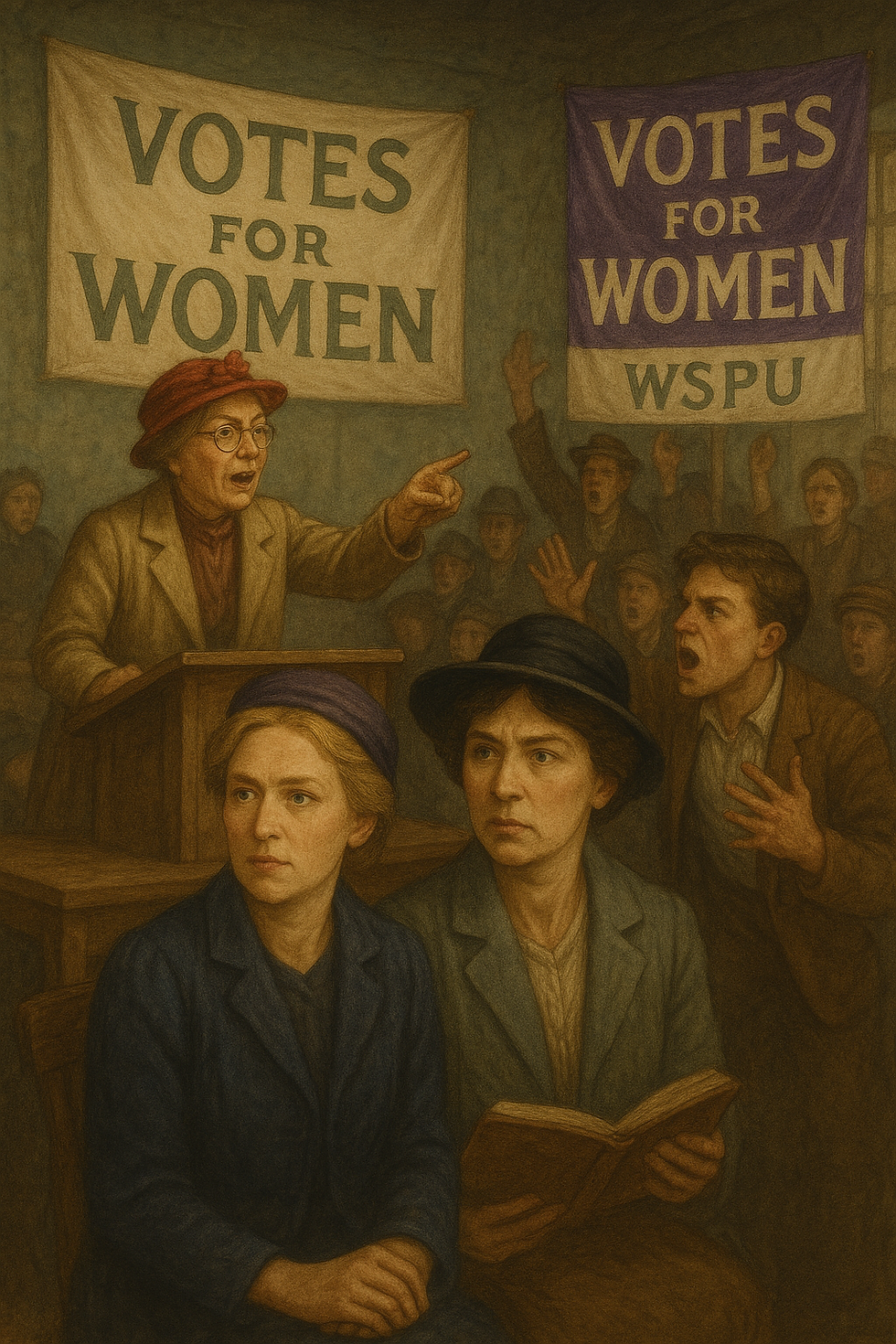
Matthias’s bitterness deepens as the world shifts around him. He despises the suffragette movement, not only for its politics but because of what it threatens: order, hierarchy, and family respectability. His own sister’s involvement in militant suffragette activity fills him with rage and shame, reinforcing his belief that women stepping beyond their place bring destruction in their wake.

Petra’s relationship with Eleanor Weiss further unsettles him. To Matthias, it represents moral disorder and social danger — another crack in the world he is desperate to hold together. Where Kate sees Petra’s courage, Matthias sees threat.
Everything ends abruptly.
Both Petra and Matthias die on the Titanic — a historical catastrophe that becomes deeply personal for Kate. Their deaths close two emotional chapters at once: the friend she loved but never dared to claim, and the man whose obsession haunted her life.
Yet Kate does not leave the story unresolved.
After Petra’s death, Kate receives a letter written before the voyage — a message from beyond the grave. In it, Petra offers understanding, affection, and a kind of emotional recognition Kate never allowed herself to seek while Petra lived. The letter gives Kate something she has never had before: closure without exposure. Love acknowledged without consequence.
It is the most intimate moment of Kate’s life — and it occurs in silence.
In later years, Kate’s role in the family is finally recognized. After Emily’s death, Kate inherits the majority of her mother’s money, not through manipulation or demand, but because her siblings — all but one — voluntarily give up their share. They understand what Kate has been to the family: the constant, the organizer, the one who stayed, who held things together when others could not or would not.
Kate remains unmarried.
This is not a failure, nor a tragedy in the terms of the novel. It is a conscious choice — one rooted in self-knowledge and acceptance of limits. She chooses respectability, independence, and integrity over compromise or concealment. She lives without public declaration, but not without meaning.
Kate Tisdall’s life is defined not by what she does, but by what she understands — and by the cost she is willing to pay to survive intact.
She does not live loudly. She lives honestly, within the narrow space history allows her.


Comments