


meet sidney tisdall

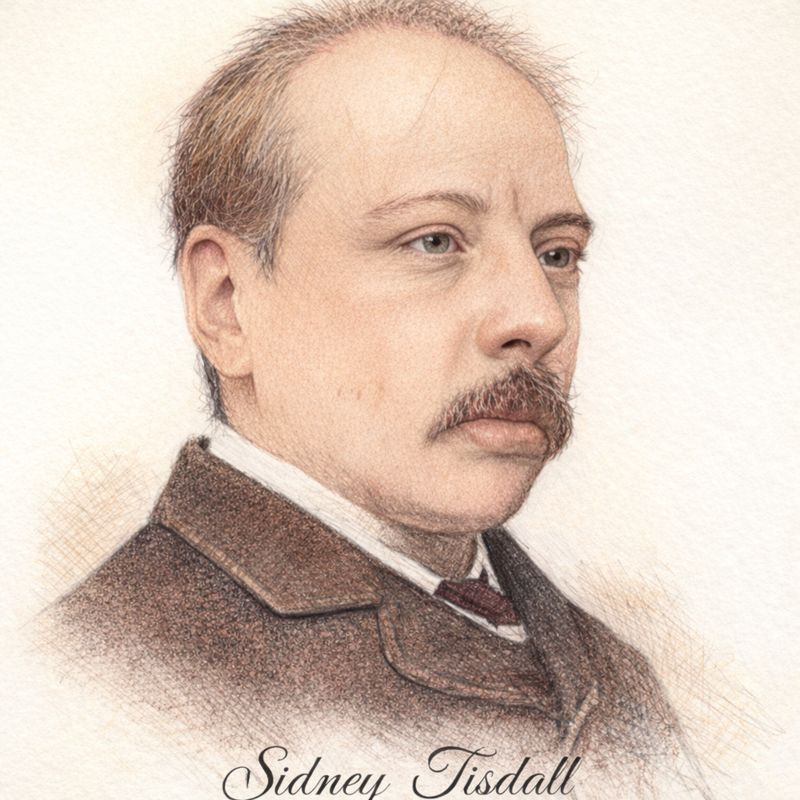
Sidney Tisdall is not a man who draws attention to himself — and yet he is the sort of man whose presence quietly shapes everything around him.
He belongs to a generation for whom identity is inseparable from work. To know Sidney is to understand how he earns his living, how reliably he does it, and how carefully he guards his reputation. In the world he inhabits, a man’s good name is not an abstract concept; it is a form of currency, earned slowly and lost quickly. Sidney understands this instinctively.
He is steady rather than ambitious, principled rather than sentimental. He does not chase novelty or excitement, and he distrusts excess in all its forms — too much noise, too much display, too much talk. What he values instead is continuity: the same road walked daily, the same door unlocked at night, the same family gathered at the table.
Sidney’s authority within the household is quiet but unquestioned. He does not rule by fear or bluster, but by example. His children learn early that he notices effort, that he respects honesty, and that excuses rarely impress him. Praise, when it comes, is understated — and therefore deeply felt.
He is a man shaped by Victorian values, but not an unthinking one. He senses the world shifting around him as the Edwardian age approaches: louder streets, faster entertainments, new possibilities that feel both exciting and destabilising. He does not reject change outright, but he watches it warily, measuring its impact on family, morality, and work.
Sidney’s relationship with modernity is cautious. He understands that the old certainties are no longer guaranteed, yet he believes deeply that some things should endure — responsibility, respectability, and the dignity of labour among them. He worries, quietly, about what will be lost if these values slip away.
As a husband, Sidney is loyal rather than demonstrative. His partnership with Emily is built on mutual reliance rather than romance. He trusts her judgement, defers to her domestic authority, and understands — perhaps more than he ever articulates — that the household runs because she makes it so. Their marriage is not theatrical, but it is solid, rooted in shared effort and shared endurance.
As a father, Sidney carries a heavy, often unspoken sense of obligation. He believes it is his duty to provide not only materially, but morally — to set a standard his children can measure themselves against. When they stray from his expectations, his disappointment is quiet but profound. When they succeed, his pride is rarely voiced, but deeply present.
Sidney Tisdall represents a type of man rarely centred in history books, yet foundational to family life at the turn of the century: men whose lives were built on reliability rather than recognition, and whose legacy lay not in public achievement, but in the lives they held together.
In telling Sidney’s story, The Tisdall's honours the quiet strength of ordinary fathers — men who carried the weight of their families without ceremony, and whose constancy shaped generations.


Comments